Building a Multi-Agent System for Intelligent Ad Delivery: A Step-by-Step Guide
Overview
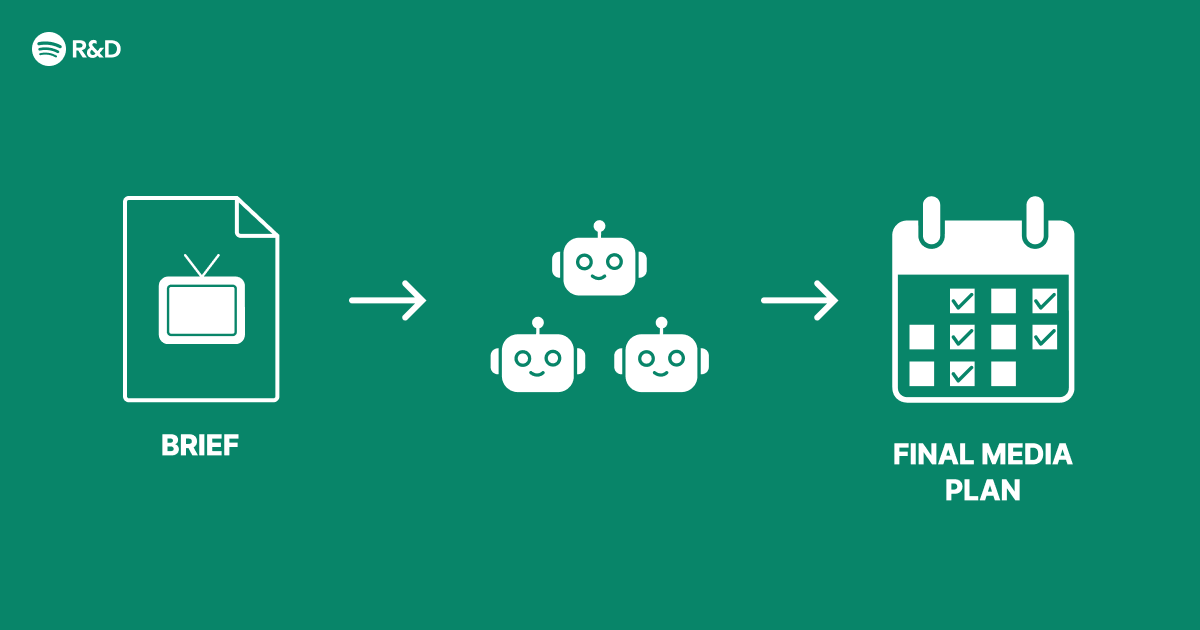
Modern advertising platforms face a structural challenge: balancing relevance, budget efficiency, and user experience across thousands of campaigns in real time. A single monolithic AI model often struggles to handle conflicting objectives and dynamic constraints. At Spotify Engineering, we encountered exactly this problem when scaling our ad system. Instead of shipping a one-size-fits-all AI feature, we rearchitected our ad decision engine around multi-agent systems—a collection of specialized AI agents that collaborate and negotiate to deliver smarter advertising outcomes. This tutorial walks you through the core concepts, prerequisites, and implementation steps for building such a system, complete with code examples and common pitfalls to avoid.
Prerequisites
Knowledge
- Familiarity with Python and basic machine learning concepts
- Understanding of reinforcement learning (RL) fundamentals (value functions, policies)
- Basic knowledge of message-passing or event-driven architectures
Tools & Libraries
- Python 3.8+
gym(for RL environment simulation)ray(for distributed agent execution)redisorrabbitmq(for inter-agent communication)tensorflow/pytorch(agent policy networks)
Infrastructure
- At least one server or cloud instance (for production, a Kubernetes cluster is recommended)
- Streaming data pipeline (e.g., Kafka) for ad events
Step-by-Step Instructions
1. Define Agent Roles and Objectives
In a multi-agent advertising system, each agent specialises in a subproblem. Typical roles include:
- Bidding Agent – decides optimal bid price per auction
- Budget Allocation Agent – distributes daily budget across campaigns
- Creative Selection Agent – picks the best ad creative for a user context
- Pacing Agent – modulates spend velocity to avoid early budget exhaustion
For each agent, define a clear reward function. For example, the Bidding Agent’s reward might be (conversion_value - bid_cost) while the Pacing Agent’s reward is a penalty for exceeding hourly spend limits.
# Example: BiddingAgent reward function
def bidding_reward(conversion, cost):
    return conversion * value_per_conversion - cost
2. Design Inter-Agent Communication
Agents cannot operate in isolation. They must share state (e.g., remaining budget, current bid landscape) and negotiate decisions. We used a blackboard architecture where agents write and read from a shared Redis store.
- Use
redis-pyfor simple key-value writes. - For complex coordination, implement a contract-net protocol: an agent broadcasts a task, others bid on it, and the best bidder executes.
import redis

r = redis.Redis()
# BiddingAgent writes its current bid price
r.set('current_bid', 0.45)

# PacingAgent reads the bid to adjust pace
current_bid = float(r.get('current_bid'))
3. Train Agents with Multi-Agent Reinforcement Learning
We used a centralised training, decentralised execution (CTDE) framework. Each agent learns its own policy using PPO (Proximal Policy Optimization). The environment is a custom ad auction simulator.
import gym
from ray.rllib.agents.ppo import PPOTrainer

# Register custom ad environment
gym.register('AdAuction-v0', entry_point='ad_env:AdAuctionEnv')

trainer = PPOTrainer(
    config={
        'multiagent': {
            'policies': {
                'bidder': (None, obs_space, act_space, {}),
                'pacer': (None, obs_space, act_space, {}),
            },
            'policy_mapping_fn': lambda agent_id: agent_id,
        },
        'num_workers': 4,
    },
    env='AdAuction-v0'
)

for i in range(100):
    result = trainer.train()
    print(f'Iteration {i}: reward={result["episode_reward_mean"]}')
4. Deploy Agents as Microservices
Each agent runs in its own container or separate process, communicating via gRPC or message queues. Use Ray Serve or FastAPI to expose inference endpoints.

# BiddingAgent service (FastAPI)
from fastapi import FastAPI
import uvicorn

app = FastAPI()

@app.post('/bid')
def get_bid(user_context: dict, campaign_id: str):
    # load model and compute bid
    bid = model.predict(user_context)
    return {'bid_price': bid}

if __name__ == '__main__':
    uvicorn.run(app, host='0.0.0.0', port=8000)
5. Implement Monitoring and Feedback Loops
Agents must continuously learn from live data. Stream ad outcomes (impressions, clicks, conversions) into a Kafka topic, and have a feedback agent update each agent’s experience buffer. Then periodically retrain models.
- Use Prometheus for metrics (e.g., average bid price, budget utilization).
- Log all agent decisions with unique IDs for debugging.
Common Mistakes
Mistake 1: No Shared State Coordination
Agents that don’t share budget or bid information will overshoot or underspend. Always implement a centralised state store (Redis) and enforce read-after-write consistency.
Mistake 2: Training Agents in Isolation
If agents are trained separately with static behavior of others, they won’t learn to cooperate. Use multi-agent training with concurrent environment steps.
Mistake 3: Overly Complex Communication Protocols
Don’t build a full-fledged negotiation system on day one. Start with simple broadcast+subscribe; add complexity only after validating core behavior.
Mistake 4: Neglecting Latency and Througput
Advertising decisions must be made in milliseconds. Cache frequent inferences, use async I/O, and precompute features.
Summary
Building a multi-agent architecture for advertising solves the structural problem of competing objectives by decoupling decision-making into specialized, collaborative agents. This guide covered the essential steps: defining agent roles, designing communication, training with multi-agent RL, deploying as microservices, and monitoring. By avoiding common pitfalls (isolated training, lack of coordination, excessive complexity), you can create a system that dynamically adapts to user behavior and campaign goals—just as we did at Spotify. The result is smarter, more efficient ad delivery without sacrificing user experience.
Related Articles
- Creating Amiable Web Communities: Insights from the Vienna Circle
- 7 Reasons Critical Role's Campaign 4 Cast Embraces Character Mortality
- How to Revolutionize Community Search with Hybrid Retrieval and Automated Evaluation
- Sync Obsidian for Free Across All Your Devices in Under 10 Minutes
- Breaking: The 1930s Vienna Circle Offers a Blueprint for De-escalating Online Toxicity — New Historical Study
- Alexa for Shopping: Amazon’s New AI Assistant on Amazon.com
- How Brennan Lee Mulligan Transforms Critical Role's New Campaign into a D&D Masterclass
- Vienna Circle's Amiability Is Blueprint for Taming Toxic Web, Study Reveals