10 Groundbreaking Revelations About Organic Remains in Dinosaur Fossils
For decades, paleontologists believed that fossilization completely erased all traces of organic material, leaving behind only mineralized bones. But a stunning discovery in a 66-million-year-old Edmontosaurus fossil from South Dakota has shattered that assumption. Using cutting-edge techniques, scientists detected remnants of collagen—the primary structural protein in bone—proving that organic molecules can survive deep time. This article explores the ten most important aspects of this revelation, from the methods used to the profound implications for our understanding of dinosaurs and the fossilization process. Jump to the first revelation.
1. The Discovery That Changed Everything
Until recently, the official stance was that organic molecules couldn't outlast the destructive forces of fossilization—pressure, heat, and microbial activity over millions of years. However, a team of researchers found compelling evidence in a remarkably preserved Edmontosaurus skeleton unearthed in the Hell Creek Formation of South Dakota. They detected collagen peptides using mass spectrometry and protein sequencing, overturning a long-standing dogma. This wasn't a contamination or a false positive; the molecules were endogenous, meaning they belonged to the dinosaur itself. The find has forced paleontologists to rethink how fossils are formed and what information they might still hold.
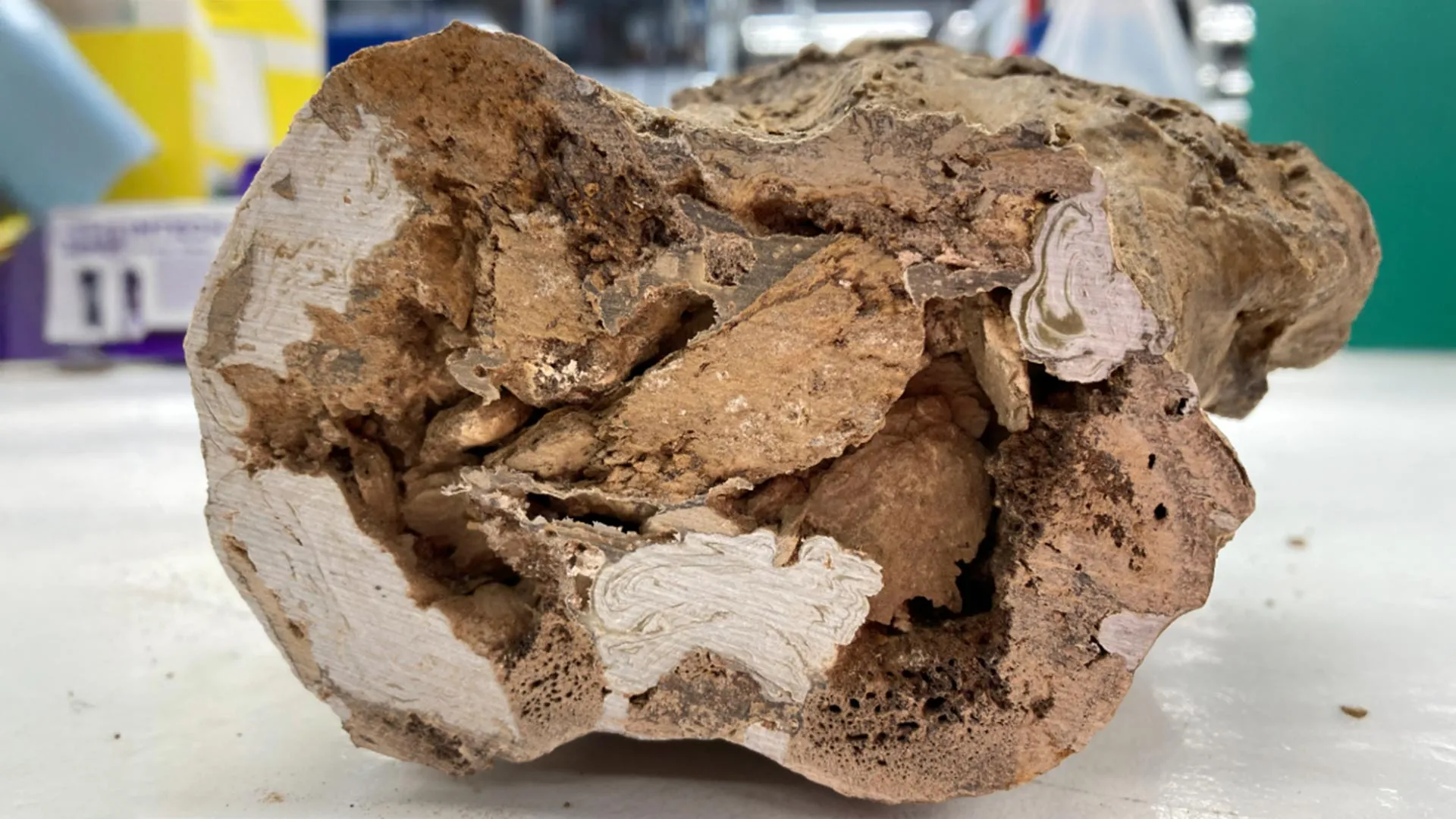
2. The Edmontosaurus Fossil – A Perfect Preservation
The key to this breakthrough was the exceptional condition of the fossil. The Edmontosaurus specimen, a duck-billed dinosaur, was buried rapidly in fine-grained sediments that minimized oxygen exposure and microbial decay. Additionally, the bone tissues had a unique microstructure that acted like a natural container, shielding proteins from environmental degradation. This suggests that similar preservation might be more common than previously assumed. Paleontologists are now re-examining other well-preserved fossils for potential organic residues. The South Dakota discovery serves as a model for identifying ideal burial conditions that promote molecular survival over geological timescales.
3. Collagen: The Protein That Survived 66 Million Years
Collagen is the most abundant protein in vertebrate bones, forming a sturdy triple-helix structure that provides tensile strength. Under normal decay, collagen breaks down into amino acids within thousands of years. Yet in this case, fragments of the collagen molecule persisted for 66 million years. The researchers sequenced peptide fragments that matched known collagen sequences from modern birds and crocodilians—the closest living relatives of dinosaurs. This demonstrates that collagen's molecular structure is remarkably stable in certain environments. The finding also opens the door to studying dinosaur biochemistry directly, offering insights into growth rates, biomechanics, and even disease.
4. Advanced Techniques Unlock Ancient Secrets
Traditional methods couldn't detect such tiny organic remnants, but modern analytical chemistry changed the game. The team employed a combination of high-resolution mass spectrometry, which measures the mass-to-charge ratio of ions, and liquid chromatography to separate complex mixtures. These techniques allowed them to identify specific peptide sequences with extraordinary precision. They also used immunological assays—antibodies that bind to collagen—to confirm the presence of the protein. The approach is now being applied to other fossils, including those of T. rex and Brachylophosaurus, with similar results. This technological revolution is creating a new field: molecular paleontology.
5. How Mass Spectrometry Identified Molecules
Mass spectrometry works by ionizing chemical compounds and sorting them by their mass. In the Edmontosaurus study, researchers extracted proteins from bone fragments, digested them into peptides, and then analyzed the peptide masses. By comparing the data against protein databases, they found matches to collagen from birds and reptiles. A technique called tandem mass spectrometry (MS/MS) provided even more detailed sequencing by fragmenting individual peptides and reading their amino acid order. This method is so sensitive that it can detect molecules at the femtomole level—equivalent to finding a single grain of salt in an Olympic swimming pool. This level of sensitivity was crucial for finding the sparse organic remnants.
6. Protein Sequencing Confirms the Find
To ensure no contamination from modern sources, the researchers performed extensive controls, including dating the surrounding rock and analyzing sediment samples. The final confirmation came from de novo sequencing, where the peptide sequences were determined directly from the mass spectra without relying on known databases. The resulting sequences were clearly distinct from any modern contaminants and matched predicted dinosaur collagen models. Additionally, the geographic origin and consistent results from multiple bone fragments ruled out laboratory contamination. This rigorous validation convinced the scientific community that the organic molecules were indeed original dinosaur proteins, not recent intrusions.
7. What This Means for Dinosaur Physiology
Discovering collagen opens a window into the biology of dinosaurs. Collagen properties influence bone hardness, flexibility, and healing capacity. By analyzing the peptide sequences, scientists can infer the mechanical properties of dinosaur bones, such as how they withstood stress during running or fighting. Moreover, the presence of collagen suggests that other proteins, like those involved in blood clotting or muscle function, might also survive under optimal conditions. This could lead to a better understanding of dinosaur metabolism, growth patterns, and even evolutionary relationships. For instance, comparing dinosaur collagen to that of modern birds reinforces the theory that birds evolved from theropod dinosaurs.
8. Implications for Evolution and Soft Tissue
The discovery has profound implications for the study of evolution. Previously, phylogenetic relationships among extinct species were based solely on bone shape and structure. Now, molecular data from fossils can provide independent evidence. For example, the Edmontosaurus collagen sequences align more closely with those of birds than with crocodilians, supporting the dinosaur-bird link. Furthermore, if organic molecules can survive, then perhaps other soft tissues—like blood vessels, skin collagen, or even DNA fragments—might also persist in exceptionally preserved fossils. While DNA degrades much faster than proteins, the existence of ancient proteins suggests we may be able to extract more detailed genetic information than once thought possible.
9. Challenges to the Previous Beliefs
The discovery directly challenges the long-held belief that fossilization is a purely mineral replacement process. Traditional taphonomy—the study of what happens to organisms after death—assumed all organic material was lost during diagenesis. This find forces a revision: some organic molecules can be locked away in stable mineral matrices for tens of millions of years. Skeptics initially argued that the detected proteins were contamination from microbes or handling, but multiple independent studies using different techniques have confirmed the results. The paradigm shift means that future fossil excavations must adopt stricter protocols to avoid contaminating potential organic remnants and to preserve them for molecular analysis.
10. Future Research and Potential Discoveries
This breakthrough has ignited a new wave of research. Scientists are now systematically scanning well-preserved fossils from various time periods and environments to map the extent of protein survival. They are also developing even more sensitive instruments to detect smaller fragments. The Edmontosaurus find suggests that certain deep-time fossils may contain a wealth of biochemical information. Future projects might focus on extracting proteins from fossilized eggs, teeth, or even horn sheaths, providing insights into diet, development, and behavior. Additionally, understanding how proteins degrade in fossils can help refine molecular clocks and improve our knowledge of diagenetic processes. The words “fossil” and “organic” may no longer be mutually exclusive.
In conclusion, the detection of collagen in a 66-million-year-old dinosaur fossil has revolutionized paleontology. It proves that organic molecules can survive under the right conditions, opening up an entirely new field of molecular paleontology. With advanced analytical techniques and a fresh perspective on fossil preservation, we may soon unlock the biochemical secrets of long-extinct creatures. For those who want to revisit the key points, start again at the beginning or explore the future directions of this exciting research.
Related Articles
- From Solar Flares to Sky Sparks: How a Space Physicist Revolutionized Lightning Science
- 5 Surprising Facts About the Donut-Shaped Parachute Headed to Mars
- 5 Surprising Ways Electricity Could Perfect Your Coffee Brew
- First Quantum-Resistant Ransomware Confirmed: Kyber Uses NIST-Approved Encryption
- 10 Surprising Facts About How Serotonin Could Be Fueling Your Tinnitus
- Ocean DNA Reveals Secret World of Deep-Sea Giants Off Western Australia
- 50 Years of Inspiration: Inside NASA Goddard's Visitor Center
- 10 Breakthroughs from NASA's Supersonic Mars Helicopter Rotor Tests