5 Gains from Giving Up Infinity: Rethinking Reality Through a Finite Lens
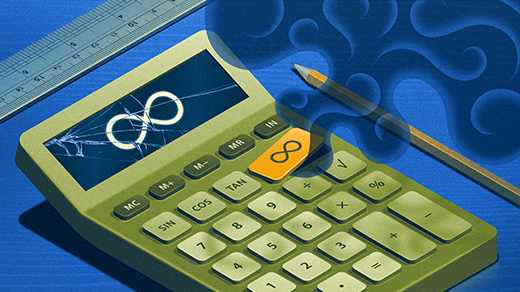
What if the universe doesn't stretch into an endless expanse of continuous space and time, but instead ticks along like a cosmic clock? This is the provocative idea championed by mathematician Doron Zeilberger, who argues that everything—numbers, nature, and even reality itself—is fundamentally finite. By rejecting the concept of infinity, Zeilberger opens the door to a fresh perspective on mathematics, physics, and our place in the cosmos. His 'ultrafinitist' view suggests that looking out the window, we see not an infinite continuum but a discrete machine, where each moment is a distinct tick. What could we possibly gain by losing infinity? Here are five surprising benefits that challenge our deepest assumptions and hint at a more grounded, computable world.
1. Mathematical Clarity Without Infinite Loops
Infinity has long been a source of paradox and confusion in mathematics. From Zeno's paradoxes to Cantor's hierarchies of infinite sets, the very concept often leads to unintuitive results that seem disconnected from physical reality. By embracing a finite universe, Zeilberger suggests we can eliminate these paradoxes entirely. In his view, there are no actual infinite sets—only very large, finite ones. This approach simplifies mathematical logic: you no longer need to worry about the 'actual infinite' in proofs or calculations. Instead, every number is a concrete, reachable quantity. For instance, the idea of a 'limit' becomes a practical approximation rather than a mystical leap into infinity. This clarity has practical benefits in fields like computer science, where infinite loops are errors, not features. By stripping away the infinite, we gain a mathematics that is more intuitive, less contradictory, and better aligned with how we actually compute things in the real world.
2. Computational Feasibility and Real-World Models
In an age of digital computers, the discrete nature of computation is king. Zeilberger's finite universe aligns perfectly with this reality. If the universe itself is a discrete machine, then we can model it using algorithms that run in finite time and memory—no need for infinite precision or continuous approximations. This has huge implications for physics simulations, artificial intelligence, and data analysis. For example, modeling a physical system as a continuous process often requires solving complex differential equations with infinite degrees of freedom. But if space and time are made of discrete 'ticks,' we can use simpler, finite-state machines to simulate the same behavior. This computational approach is not just a philosophical stance; it's a practical tool. Engineers and scientists already use discrete models (like cellular automata) to simulate fluid dynamics, traffic flow, and even quantum mechanics. By giving up the assumption of infinity, we can build models that are more efficient, more transparent, and less prone to the numerical errors that plague continuous methods.
3. Resolving the Paradoxes of the Infinite in Physics
The infinite has long haunted physics, from the singularities at the center of black holes to the infinite energies predicted by quantum field theory. Zeilberger's finitism offers a way out: if infinity doesn't exist, then singularities are just mathematical artifacts that arise from assuming continuous space-time. In a discrete universe, there is no 'point' of infinite density; instead, there is a smallest possible length (like the Planck length) beyond which we cannot go. This idea resonates with many modern theories, such as loop quantum gravity, which posits that space-time is quantized. By losing infinity, we gain a universe that is free of absurdities: no infinite tides, no infinitely hot big bang, no paradoxes of quantum measurement that require 'infinite' superpositions. Instead, everything is finite, computable, and potentially testable. This doesn't just simplify the math; it makes physics more grounded in empirical reality. Zeilberger's view encourages us to look for finite, discrete explanations for phenomena like dark energy or the fine-tuning of constants, rather than invoking infinite possibilities.
4. A More Human-Centric Understanding of Numbers
Numbers, in the standard view, march on forever: there is always a next integer, a next prime, a next real number. But Zeilberger reminds us that we are finite beings—our brains, our computers, our lifetimes are all limited. So why should numbers be different? An ultrafinitist perspective holds that the numbers we can actually reach or use are the only numbers that matter. This shifts the focus from abstract, infinite sets to concrete, finite collections. For example, the largest number that anyone has ever written down (say, a googolplex) is actually just a finite integer. The concept of 'all natural numbers' is a convenient fiction—there is no physical or mental reality that contains them all. By adopting this view, we gain a more honest and human-centered mathematics. It acknowledges that our knowledge is bounded, and that mathematical truth is not a Platonic heaven of infinite beings but a human construct built from finite steps. This can be liberating: it means we can focus on what we can actually do with numbers, rather than worrying about what lies beyond an endless horizon.
5. A New Way to Think About Time and Causality
Time, in our everyday experience, flows continuously from past to future. But if the universe ticks like a discrete machine, then time is a series of instants, each distinct and causally connected to the next. This discrete time model solves several philosophical puzzles. For instance, it eliminates the 'problem of the present'—if time is a continuum, how do we define the now? In a discrete model, the present is simply the current tick. It also makes causality more straightforward: each tick causes the next, without the need for infinite regression or Zeno's arrow paradox. This view has implications for free will and determinism: if the universe is a finite-state automaton, then the future is determined (or at least computable) from the present state. Zeilberger's perspective invites us to think of time as a digital clock rather than an analog wave. This doesn't mean we lose the richness of temporal experience; rather, we gain a clearer, more mechanistic understanding of how events unfold. And in doing so, we can better integrate time into our mathematical models of physics and consciousness.
By giving up infinity, we might feel we are losing something grand and mysterious. But as Zeilberger's work suggests, the payoff is a universe that makes sense within our finite cognitive and computational limits. From clearer mathematics to testable physics, from pragmatic modeling to a grounded view of time, we gain a world that is no less wondrous for being discrete. So perhaps the question is not what we lose by losing infinity, but what we gain: a reality that finally fits within the bounds of our finite minds.
Related Articles
- Supercomputer Simulations Unlock Dolphins' High-Speed Propulsion Secret
- BREAKING: Qdrant Architect Reveals Critical Differences Between Semantic Search and Traditional Text Search
- How Astronomers Discovered a Surprising Atmosphere on a Tiny World at the Edge of the Solar System
- Revolutionizing R&D: Q&A on Microsoft Discovery's Agentic AI Platform
- How to Revitalize Disruptive Science in an Aging Research Landscape
- Artemis III Moon Landing Delayed; NASA Plans Earth Orbit Test in Late 2027
- Cloud Patterns Signal the End of Winter in Alaska
- The Enigmatic Atmosphere of a Tiny Trans-Neptunian Object: A Mystery at the Solar System's Edge