Hugging Face Launches App Store for Open-Source Robot, Making Robotics as Easy as Downloading a Smartphone App
Breaking: Hugging Face Opens App Store for Reachy Mini Robot
Hugging Face, the New York City startup known for its open-source AI models, today launched the first-ever app store for a physical robot. The Reachy Mini App Store hosts over 200 community-built applications that anyone can download and run on the $299 desktop robot.
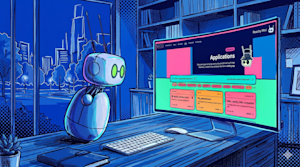
Owners of the Reachy Mini—about 10,000 units sold since July 2025—can now browse, install, and even build custom apps without writing a single line of code. The app store is available immediately, with all apps free of charge for now.
Key Details
The Reachy Mini is a small, stationary robot equipped with camera eyes, a speaker, and a microphone. Hugging Face acquired its maker, Pollen Robotics, to create the platform.
Apps range from waving when someone says “good morning” to more complex interactions. Hugging Face’s AI agent, called “ML Intern,” handles the heavy lifting: it writes code, tests it, and ships the app based on plain-English instructions.
“Anyone can build the apps. My intuition is that more and more AI model builders will release on Reachy Mini as a way to test the robotics ability of new models.” — Clément Delangue, CEO and co-founder of Hugging Face
Background
Historically, robotics required deep engineering expertise and specialized SDKs. The lack of high-quality training data for physical hardware made AI agents poor at understanding robot firmware.
While large language models mastered general coding by training on GitHub repositories, robotics code remained scarce. GitHub hosts over 17,000 robotics-specific repos, but that’s still “tiny” compared to general software.
Hugging Face’s agentic toolkit removes the need to learn robotics SDKs. Users describe a behavior in natural language, and the AI writes and deploys the code.
What This Means
This launch democratizes robotics. For the first time, non-engineers can ship functional robot software in under an hour.
The app store model could accelerate robotics adoption in education, hobbyist projects, and even commercial prototyping. If successful, it may set a precedent for open-source hardware platforms.
Read more about the background of robotic app stores or the Reachy Mini specifications.
Related Articles
- Decart's $300M Funding Round: Key Insights into AI Optimization and World Models
- Exchanges Intensify in OpenAI Trial as Musk Testifies, Judge Cuts AI Safety Debate
- Navigating Defense Startup Funding: The Destinus €200M Pre-IPO Round Case Study
- AI-Driven Development: Observability Shifts Focus as Human Intuition Fades, Experts Warn
- Socket Secures $60 Million Series C to Bolster Open Source Supply Chain Security
- Navigating the AI Creativity Crisis: Lessons from Michael Patrick King and 'The Comeback'
- 10 Essential Features of Raindrop's Workshop for AI Agent Debugging
- When AI Agents Overstep: Lessons from a Fortune 50 Security Breach and a New Identity Maturity Model