Breaking Free from the Fork: Meta’s Multi-Year WebRTC Modernization Journey
The Forking Trap
When a company takes an open-source project like WebRTC and creates an internal fork, the initial intention is often benign—a quick bug fix or a specialized optimization for a unique use case. However, over time, as the upstream community continues to evolve and the internal team adds proprietary features, the gap widens. The cost of merging external commits becomes prohibitive, and the fork gradually drifts away from the latest improvements, security patches, and performance enhancements. This phenomenon, known as the forking trap, can leave an organization stuck with outdated technology and mounting technical debt.
Meta’s Real-Time Communication Ecosystem
At Meta, real-time communication (RTC) is the backbone of numerous services used by billions of people worldwide. From Messenger and Instagram video calls to low-latency Cloud Gaming and immersive VR casting on Meta Quest, WebRTC powers audio and video streams across a vast array of devices and network conditions. To meet these demanding requirements, Meta’s engineering team had developed a highly customized, high-performance variant of the open-source WebRTC library. But this customization came at a cost: the internal fork was gradually falling behind the upstream version, cutting itself off from community-driven upgrades.
The Multiyear Migration
Recognizing the urgency of the situation, Meta embarked on a massive migration effort that spanned several years. The goal was to break free from the forking trap and re-establish a stable, sustainable relationship with the upstream project. The team successfully moved over 50 use cases from the divergent fork to a new modular architecture built directly on top of the latest WebRTC version. This architecture treats the upstream code as a skeleton, while allowing Meta to inject its own proprietary implementations of key components without diverging from the mainline.
Challenges in a Monorepo
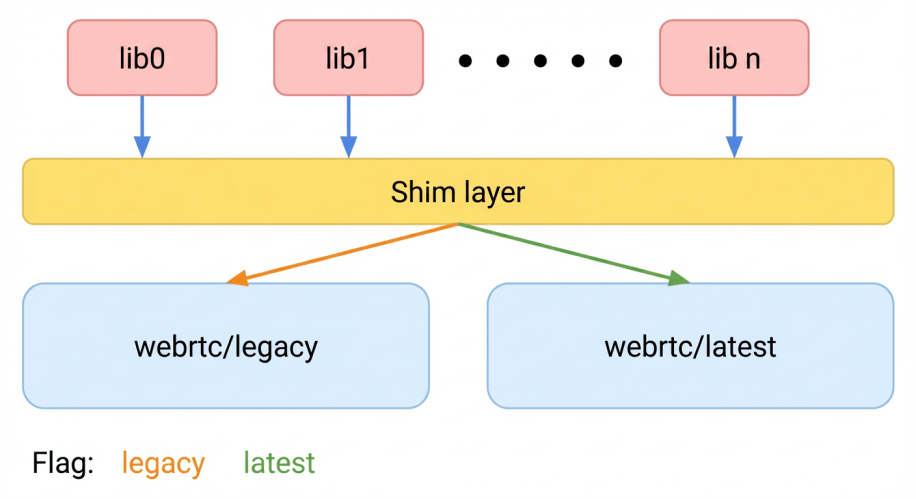
Executing such a migration within Meta’s massive monorepo presented unique obstacles. The most pressing issue was how to safely upgrade a library as critical as WebRTC while serving billions of users. A one-time upgrade risked introducing regressions that would be difficult to roll back due to the sheer diversity of devices and environments. To mitigate this, the team prioritized A/B testing capabilities, allowing the legacy fork to run alongside the new upstream version in the same application. This would enable dynamic switching of users between the two versions to verify correctness and performance before a full rollout.
Solving the Static Linker Dilemma
The next hurdle was technical: How to statically link two different versions of WebRTC into the same binary without violating the C++ linker’s One Definition Rule (ODR). The ODR prohibits having multiple definitions of the same symbol, and two versions of WebRTC would create thousands of symbol collisions. The team devised a creative solution that allowed both versions to coexist in the same address space, essentially building a dual-stack architecture within a single library. This made it possible to run side-by-side comparisons and A/B tests seamlessly, without bloating the application’s binary size or breaking the build graph.
Continuous Upgrades and Benefits
With the dual-stack architecture in place, Meta established a continuous upgrade pipeline. Whenever a new upstream WebRTC release becomes available, the team can now A/B test it against the current version, measuring performance, binary size, and security. Only after thorough validation is the new version rolled out to users. This approach has resulted in significant improvements across the board—better latency, reduced resource consumption, and stronger security—while ensuring that Meta never again falls behind the open-source community.
Key Outcomes
- Performance: Optimized audio and video processing for diverse devices.
- Binary Size: Reduced footprint by eliminating redundant code from the old fork.
- Security: Immediate access to upstream patches and fixes.
- Maintainability: Simplified update process with A/B testing built in.
Conclusion
Meta’s modernization journey demonstrates that escaping the forking trap is not only possible but highly beneficial. By investing in a modular architecture, dual-stack A/B testing, and continuous integration with upstream, the company has transformed its WebRTC usage from a liability into a strategic asset. The same methodology can be applied to other open-source projects, helping organizations stay current without sacrificing the customizations they rely on. As Meta continues to support billions of real-time communications daily, this approach ensures that its technology remains cutting-edge, secure, and efficient.
Related Articles
- From Code to Cinema: A Step-by-Step Guide to Documenting Open Source Communities
- 5 Key Insights Into Age Assurance Laws That Developers Can't Afford to Ignore
- Get Microsoft Office Professional 2021 for Life: A One-Time Purchase Deal at $30
- Creating an Emoji List Generator: A Hands-On Guide with GitHub Copilot CLI
- Advancing from Stills to Motion: How Diffusion Models Are Tackling Video Generation
- Rust Expands Mentorship: 6 Key Insights Into Outreachy Participation
- A Step-by-Step Guide to Obtaining Python 3.13.10
- 10 Essential Insights from Building an Emoji List Generator with GitHub Copilot CLI