Unlocking the Potential of Web Content with the Block Protocol
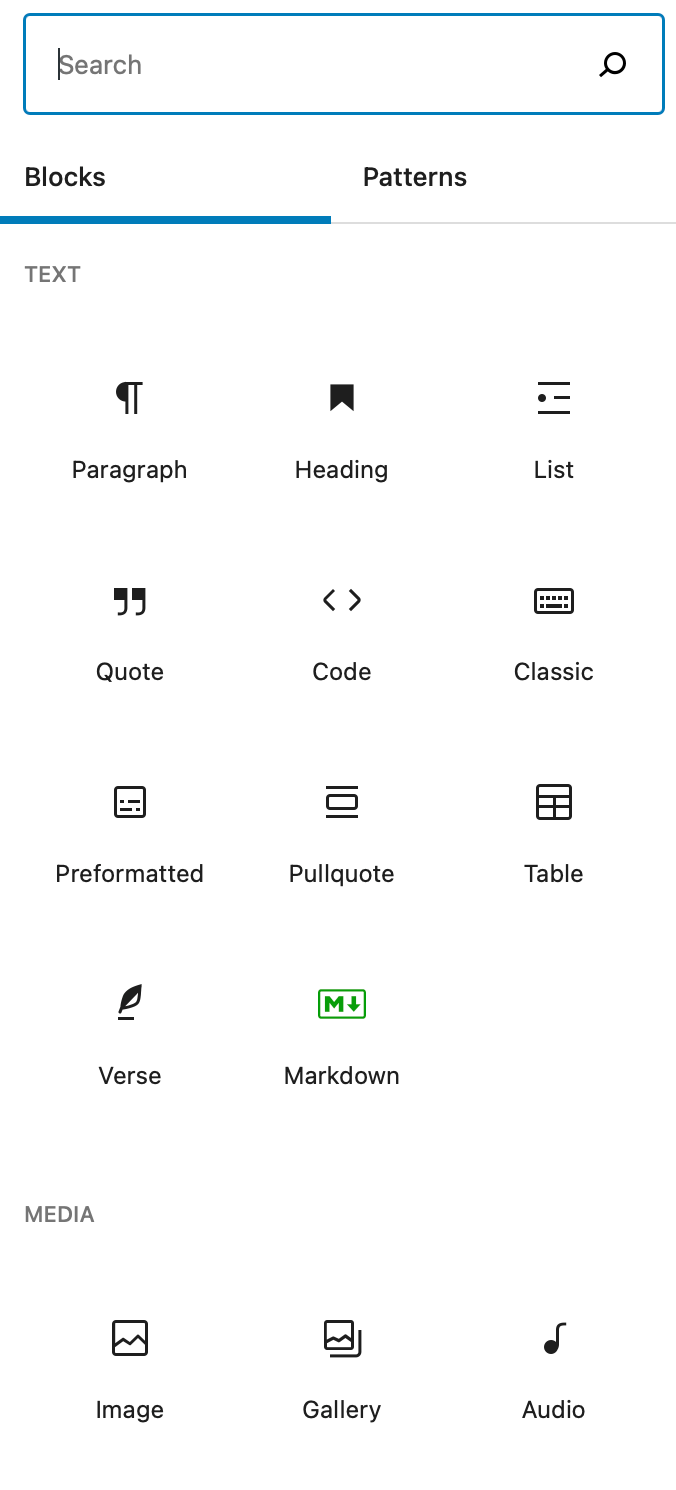
If you've used modern web editors—whether in WordPress, Notion, or Medium—you've likely encountered the block-based interface. These tools let you assemble pages by inserting individual "blocks": a paragraph, an image, a video, or even a Kanban board. While the concept is intuitive and widely adopted, the reality is that each platform implements blocks in its own proprietary way. This fragmentation limits users and burdens developers—but a new open standard aims to change that.
The Problem with Proprietary Block Systems
User Limitations
Imagine you're using a note-taking app that offers only basic blocks: text, images, and lists. You see a colleague using a gorgeous interactive calendar block in a different tool, but you can't bring it into your app. That's the current state of web blocks. End-users are confined to the features their specific editor has implemented, and moving content between platforms is nearly impossible without losing functionality.
Developer Burden
For developers, supporting a rich block ecosystem means building everything from scratch. Want a Kanban board block? A chart block? An image gallery? Write it yourself, test it, and maintain it. This duplication of effort is wasteful and often results in half-baked features. The /key to insert blocks has become a de facto standard, but everything else—the actual block implementation—remains fragmented.
Introducing the Block Protocol
To solve this, a group of developers has created the Block Protocol—an open, free, and non-proprietary specification that allows any block to work inside any compatible editor. Think of it as a universal language for web blocks: as long as both the editor and the block follow the protocol, they can talk to each other.
How It Works
The protocol defines a standard interface for embedding blocks. An editor that adopts the protocol only needs to write the embedding code once. Any block that conforms to the spec—whether it's a simple paragraph or a complex order form—can be dropped in without additional customization. The block handles its own rendering and user interactions, while the editor provides the contextual environment.
Benefits for Everyone
For users, this means access to a growing library of high-quality blocks, regardless of which app they choose. For developers, it eliminates rework: you build a block once, and it works in any protocol-compliant editor—be it a blog platform, a note-taking app, or a content management system. The entire ecosystem benefits from shared innovation.

What Can Be a Block?
The Block Protocol is deliberately agnostic about what constitutes a block. It can be anything that makes sense in a document: a paragraph, a table, a list, a diagram, or a Kanban board. It can also be anything that belongs on the web: an order form, a calendar, a video player. The key is that blocks can interact with structured or typed data, opening up possibilities for dynamic content.
The Role of Structured Data
One of the protocol's most exciting features is its support for typed data. A block can declare "I expect a list of events" or "I need a customer record." This allows blocks to be far more powerful than simple static content—they can fetch, display, and even modify data from external sources. For example, a project management block could read tasks from an API and update them directly within the document.
Join the Community
An early draft of the Block Protocol has been released, along with sample blocks and a simple editor that hosts them. The project is 100% open source, and the community is invited to contribute blocks, improve the specification, and build new editors. The vision is a vast open library of high-quality blocks that anyone can use, anywhere.
If you work on any kind of editor—a blogging tool, a note-taking app, or a content management system—consider adopting the protocol. You'll write the embedding code once and immediately unlock a universe of block types. And if you're a block developer, you'll reach a wider audience without extra effort. The web deserves blocks that are as interoperable as the links that connect them.
Related Articles
- Startup DevOps Crisis: Engineers' Ten Most Costly Mistakes Exposed - Experts Urge Immediate Overhaul
- How GlowReadTTS Brings Private, High-Quality Text-to-Speech to Your Browser
- Major Study Reveals Shifting Trends in Social Security Claiming Age – Experts Urge Reconsideration
- Expanding Swift’s IDE Reach: What You Need to Know
- Navigating Agentic AI: Why Change Control is Critical for Enterprise Adoption
- 8 Things You Need to Know About the Block Protocol: A New Standard for Web Blocks
- Undecidable Math Unleashes Unbreakable Secrets: Gödel's Ghost in Digital Encryption
- Choosing Between Single and Multi-Agent Systems: A Practical Decision Guide